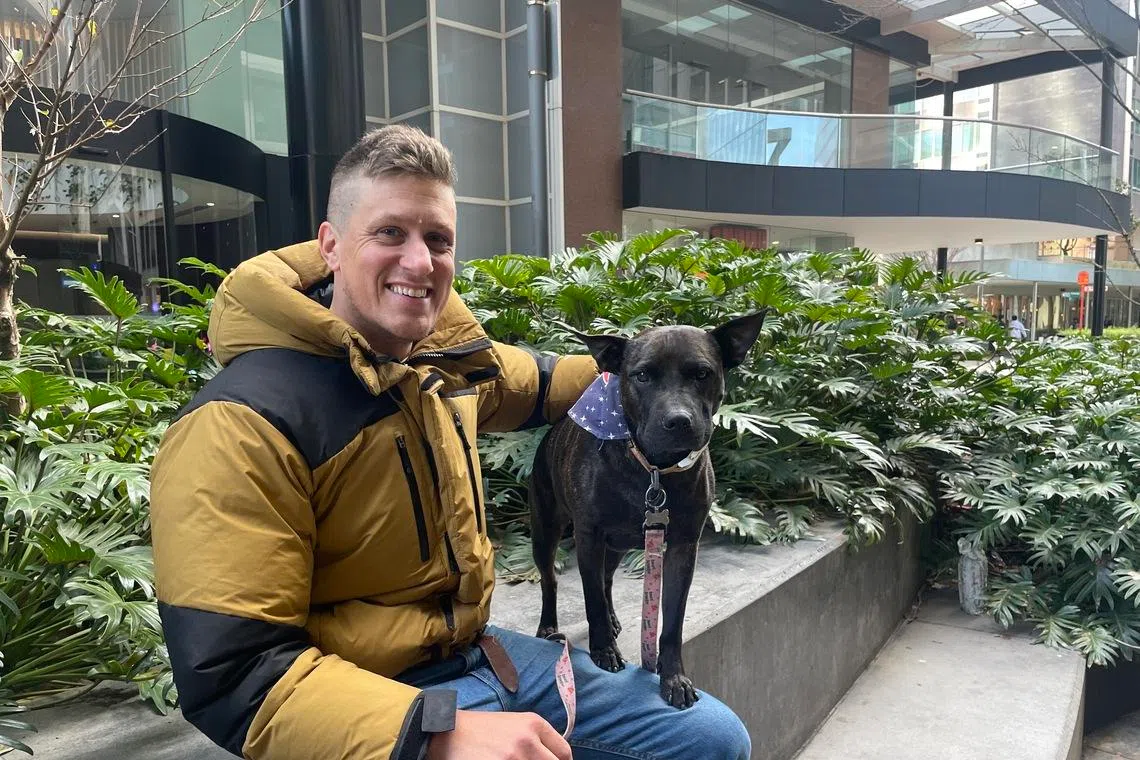
This archive records how Paul Conyngham, UNSW scientists and University of Queensland researchers moved from Rosie’s mast cell cancer to an experimental personalised mRNA treatment—so others can learn from the decisions, methods, collaboration and limits of the work.
Why document it?
To leave a clear evidence trail for researchers, veterinarians, technologists and dog owners: what was tried, who made it possible, what was observed and what one case still cannot tell us.
Rosie’s cancer vaccine was an experimental, personalised mRNA immunotherapy designed from molecular differences between her mast cell tumours and healthy tissue. Paul Conyngham used AI-assisted analysis to identify candidate targets; UNSW researchers reviewed and manufactured the mRNA; and a University of Queensland team administered the treatment under veterinary research oversight.
Several tumours reportedly shrank and Rosie’s quality of life improved, but the vaccine was given with a checkpoint inhibitor. This was one experimental case—not a clinical trial, proof of efficacy or a cure.
Paul Conyngham adopted Rosie in 2019. The Staffy–Shar Pei cross had been abandoned before finding her way to a Sydney shelter. She soon became, in Paul’s words, his “best mate.”
In 2024, a biopsy confirmed aggressive mast cell cancer. Rosie had multiple surgeries, chemotherapy and immunotherapy, but the disease continued. UNSW reported that veterinarians estimated she might have only one to six months left.
Paul was a machine-learning entrepreneur, not a biologist. He treated the diagnosis as a problem he could learn: read the research, ask better questions, turn tissue into data, and find people with the expertise to challenge and build what the data suggested.
“She’s my best mate.”
✦
The human story matters
The headline became “AI makes a cancer vaccine.” The documented reality is more interesting: a determined owner used AI to cross an expertise gap, then relied on genomic facilities, RNA scientists, veterinarians and an ethics framework to act responsibly.
02
Rosie’s cancer vaccine timeline
From a Sydney shelter to a first-of-its-kind experiment.
The journey was not a single prompt or sudden breakthrough. It was years of care, months of research, failed routes, expert review and one carefully governed attempt to buy Rosie more good time.
01
Paul meets Rosie
Paul Conyngham adopts a Staffy–Shar Pei rescue who becomes his constant companion.
02
Mast cell cancer
A biopsy confirms advanced mast cell tumours after months of worsening growths on Rosie’s legs.
03
Treatment, then data
After surgery, chemotherapy and immunotherapy fail to control the disease, Paul commissions matched tumour and healthy-tissue sequencing at UNSW.
04
Seven candidate targets
AI-assisted analysis helps Paul compare Rosie’s cancer with her healthy DNA and rank reported tumour-only neoantigen signals.
05
The first injections
UNSW’s RNA Institute turns the reviewed design into mRNA. Rosie receives the experimental vaccine with a checkpoint inhibitor at the University of Queensland.
06
A partial response
Several tumours shrink markedly and Rosie regains mobility and energy. Other tumours do not respond. It is not a cure.
07
Rosie’s legacy
UNSW Science announces that Rosie has died, remembering a dog whose case opened a larger conversation about access to personalised medicine.
Turn the tumour into data. Turn the data into a signal.
A therapeutic cancer vaccine is not designed to prevent cancer. Its aim is to show the immune system molecular flags—called neoantigens—that are present on tumour cells and absent from healthy cells.
mRNA
01
Sequence
Read DNA from Rosie’s tumour and matched healthy tissue, then check which mutations were active in tumour RNA.
02
Compare
Separate inherited variants from tumour-only changes—the molecular differences that might become immune targets.
03
Rank
Use bioinformatics and AI-assisted tools to investigate altered proteins and prioritise candidate neoantigens.
04
Encode
Translate selected targets into an mRNA sequence, reviewed and produced by trained scientists at UNSW.
05
Deliver
Package the mRNA in lipid nanoparticles and administer it under veterinary research oversight at UQ.
In plain language
mRNA is an instruction, not an edit.
The mRNA gave cells temporary instructions to make selected fragments associated with Rosie’s tumours. The goal was to help immune cells recognise those markers. It did not alter Rosie’s DNA, and it did not contain cancer cells.
What AI helped do
Learn, code, model, rank.
Public accounts describe ChatGPT assisting Paul’s research and code, AlphaFold helping investigate protein structures, and Grok helping produce the final reported construct. These tools accelerated a human-led bioinformatics process.
What AI did not do
Approve, manufacture, inject, prove.
AI did not independently validate the targets, make the physical mRNA, formulate the lipid nanoparticles, grant ethics approval, administer the treatment or establish that it worked.
Rosie’s case is important because it showed that a highly personalised workflow could reach one real canine patient. It cannot tell us how often the approach will work, for which cancers, or which part of her combination treatment produced the response.
What was observed
Several large tumours reportedly shrank markedly.
Rosie regained mobility, energy and quality of life.
Some tumours did not respond and resistant disease remained.
The workflow reached design, manufacture and administration.
What remains unknown
The separate effect of the vaccine versus the checkpoint inhibitor.
How another dog, tumour type or protocol would respond.
The response’s durability without a controlled study.
Whether all selected neoantigens generated an immune response.
n = 1
Rosie’s treatment was a single experimental case.
It was not a randomised clinical trial, and no peer-reviewed case report with complete clinical data has been published. The vaccine and a checkpoint inhibitor were used together, so causation cannot be assigned to either component from Rosie’s response.
In July 2026, UNSW Science announced that Rosie had died. No public source cited here states her cause of death, and this archive will not speculate.
Her story is larger than a headline about AI. It is the story of a rescue dog who was deeply loved, the extra time Paul fought to give her, and a collaboration that made an experimental form of personalised medicine tangible for the first time in one dog.
Rosie’s one-off treatment became the starting point for Gamgee, the company Paul Conyngham founded to continue investigating personalised cancer-treatment protocols for dogs.
The official follow-up to Rosie’s treatment continues at gamgee.io. Her story also inspired other projects, including rosievaccine.com, which are not affiliated with Paul Conyngham or the original team treating Rosie.
No. Several tumours reportedly shrank and Rosie regained mobility and energy, but other tumours did not respond. Paul and the scientists involved consistently described a partial response, not a cure.
Did ChatGPT make Rosie’s mRNA vaccine?
No. ChatGPT assisted Paul’s research and coding. Public accounts also describe AlphaFold and Grok being used during analysis and design. Human experts generated the genomic data, reviewed the design, manufactured and formulated the mRNA, secured oversight and administered the treatment.
Was Rosie the first dog to receive a personalised mRNA cancer vaccine?
UNSW Science described Rosie as the first dog to receive a personalised mRNA cancer vaccine. Because “first” claims can depend on definitions and unpublished work, this archive attributes the claim rather than presenting it as an independently proven absolute.
Can I get the same vaccine for my dog?
Rosie’s treatment was a one-off experimental protocol, not a commercially available product. Dog owners should speak with a veterinarian or veterinary oncologist and should not delay established care. Gamgee publishes current information about its investigational work and eligibility on its own website.
What happened to Rosie?
UNSW Science announced in July 2026 that Rosie had died. The public notice did not state a cause, so this archive does not speculate. Rosie’s case remains an important, carefully qualified chapter in canine precision-oncology research.
Sources + method
Last updated 11 August 2026
Follow the evidence.
This documentary prioritises first-party institutional accounts, then independent science and news reporting. Observations are separated from conclusions; conflicting or unsupported claims are not repeated as fact.
This site is an educational documentary, not a veterinary service. Rosie’s treatment was experimental and one case cannot predict outcomes for another dog. Nothing here replaces advice from a veterinarian or veterinary oncologist.
Identity + affiliation
RosiesCancerVaccine.com documents Paul and Rosie’s original case and points to Gamgee as Paul’s continuation of that work.